
One of the best investments in digital marketing that businesses should engage in to achieve sustainable online marketing is search engine optimization. Due to lack of understanding of the financial payoff, many brands invest in the creation of content keywords research technical optimization and link building. This is why learning about how to calculate roi on seo is vital to marketers business owners and digital strategists.
SEO is very likely to take time to produce results but when successful the effects are likely to be extreme. Natural traffic increases the number of search appearance and qualified leads start getting higher. Stagnant traffic does not necessarily tell all. The question that really matter is the extent to which your SEO activities are adding business value.
Responding to the return on investment will enable the businesses to make improving decisions regarding the budget planning campaign strategy content performance and long term digital development. When you understand how to bridge rankings traffic conversions and revenue you will easily have a clear picture on whether your SEO plan is actually working or not.
Why SEO ROI Matters for Business Growth
All investments made in the marketing should be quantified. SEO is not an exception. Search optimization will have a slow build-up as opposed to an immediate outcome of paid advertising. It is due to this that many businesses find it a hard task to estimate its actual worth.
The calculation of SEO ROI assists businesses to know the direction of their marketing expenditures and the type of payoff they are getting. It can also assist in understanding which pages campaigns keywords and content strategies are performing best.
The benefits of the SEO ROI analysis include making improved decisions in the fields of content marketing conversion optimization search rankings website performance customer acquisition and revenue forecasting.
Companies that monitor the performance of their SEO activities usually have a better competitive edge since they can make investments in the strategies that have resulted in consistent growth.
How to measure roi on seo
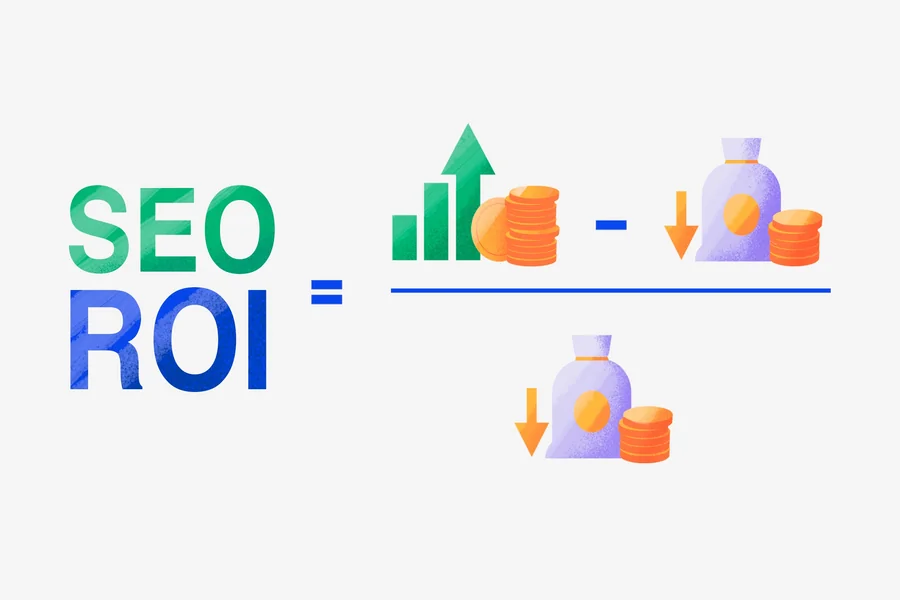
Calculation of SEO return on investment starts by getting acquainted with the fundamental formula. The most common way to measure ROI is with the amount of revenue your SEO brings versus the expenditure on your SEO.
The formula is very simple.
ROI = revenue of SEO-SEO cost/SEO cost x 100.
This equation indicates whether your investment is profitable or not.
To extract an example, in case your business would bring ten thousand dollars with the help of organic search traffic and your investment in SEO is three thousand dollars then there would be the positive and measurable return.
Multiple sources of data that is reliable is necessary to compute the SEO ROI. Most of them comprise customer relationship management software, sales reports and analytics conversion tracking on websites.
These are the most frequent cost variables of SEO, content writing technical SEO keyword research backlinks SEO tools consultant fees and inside team resources.
Accurate cost tracking in combination with revenue data then you start realizing the true worth of organic search marketing.
Important Metrics That Influence SEO ROI
In order to calculate ROI effectively, some key performance indicators have to be followed. These are measures that allow relating search visibility to business performance.
One of the initial metrics to consider is organic traffic. When search engines are sending more traffic to your site this is a good sign of more effective keyword execution and a high search results rank.
The keyboard rankings provide an insight into the exposure of your webpage to crucial words. Views can be ranked to result in increased impressions and traffic.
Another important measure is the conversion rate. Traffic is not revenue generating. The number of visitors who accomplish meaningful activities like purchases or submission of the forms of consultation is what matters.
Lead generation data assists service based businesses to comprehend the role of SEO in attaining customer acquisition.
Ticket purchase per visitor can give you more insight of the worth of your organic readers.
Bounce rate and engagement points also could assist in determining the content quality and performance of user experience.
When the metrics are co-opted, SEO tends to produce greater long term returns.
Tools That Help Track SEO Performance
Nowadays, marketers use analytics to quantify the effectiveness of SEO. In the absence of proper monitoring then linking SEO activities to revenue growth becomes very hard.
Web analytics tools are used to track user behavior landing pages, and conversion paths.
Search performance tools also display impressions clicks search query and ranking benefits across search engine.
The use of the keyword research tools assists in recognising the prospects of growth in traffic and competitor analysis.
Customer relationship management systems can be used to bridge the gap between leads and sales and certain marketing channels.
Local businesses that are inquired over the phone due to organic search can find the use of call tracking tools.
Ecommerce tracking software assists e-commerce stores in comprehending the sales of products through organic traffic.
Multiple data sources help to develop a better understanding of the overall profitability of marketing and the performance of SEO.
Common Challenges When Measuring SEO ROI
Though the approach that gauges SEO ROI is valuable, it is not necessarily easy. Attribution is one of the typical pitfalls. Purchasing often happens through numerous marketing channels and customers are likely to contact a variety of channels.
A visitor can visit your site via organic search, but will revisit later to use the social media email marketing or direct traffic but before converting. This makes attribution more complex.
SEO also generates long term returns that cannot be met in the short run. A blog post can keep on producing traffic and leads months or in some cases years after writing.
Another underdog benefit is brand awareness. Trust and recognition can be enhanced with greater search visibility, even in cases where the user does not convert immediately.
Results can also be impacted by competitive markets. Seniority on high value keywords can be time consuming and needs to be more aggressive on content strategy.
These issues would avert more realistic performance expectations by the marketers.
Improving SEO ROI Over Time
When you start monitoring performance the following objective is to make a bigger return. It requires continuous optimization and strategic decision making to achieve SEO success.
The high performing content must also be updated frequently to preserve rankings and interest.
Harmful pages might require improved internal connectivity, enhanced key word targeting or enhanced usability.
CRO has the potential to add value to the existing traffic without driving costs high.
Technical SEO can also be effective is making search engines crawl and index content more efficiently.
Developing authoritative back links may enhance trust in domains and ranking potentialities.
Audience research is useful in enabling businesses to develop content that aligns with actual search intent.
Businesses that work on content relevance and search visibility SEO ROI can be found to improve with time as it revolves around traffic quality optimization.
Final Thought
To understand the roi on seo, then learning on how to calculate the future of any business investing in online marketing is very crucial. SEO goes beyond the rankings or traffic. It constitutes creation of quantifiable business growth by involvement by visibility and income.
By monitoring the right metrics you know how customers behave and relate organic performance to business outcomes you have a clear idea about how successful your marketing delivery is.
SEO is good consistent with patience. Companies that value performance meticulously usually establish innovative plans enhance profitability and establish lasting competitive advantages in search marketing.
FAQs
What is SEO ROI?
SEO ROI is the return on investment generated from search engine optimization activities based on revenue compared to total SEO costs.
Why is it important to measure SEO ROI?
Measuring SEO ROI helps businesses understand whether their SEO campaigns are generating profitable results and supporting long term growth.
How long does it take to see SEO ROI?
SEO ROI often takes several months because search optimization usually delivers gradual long term results rather than immediate returns.
What tools help measure SEO performance?
Analytics platforms search performance tools keyword tracking software and customer management systems can help measure SEO performance.
Can small businesses measure SEO ROI?
Small businesses can measure SEO ROI by tracking organic traffic conversions leads customer value and total marketing investment.
What metrics are most important for SEO ROI?
The most important metrics include organic traffic keyword rankings conversion rate lead generation revenue and customer acquisition cost.