
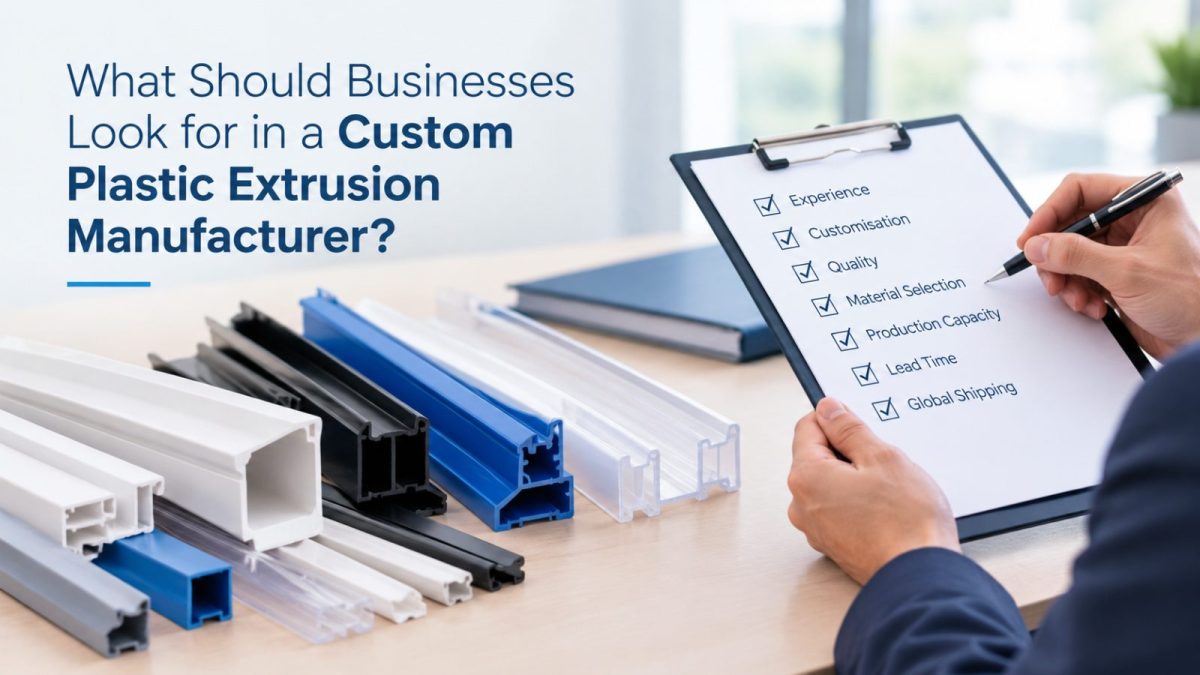
Choosing a custom plastic extrusion manufacturer requires more than comparing prices. Businesses should check the manufacturer's experience, material knowledge, customisation capabilities, production quality, lead times and ability to handle bulk orders. For companies seeking custom plastic extrusion profile solutions in India, these factors can help them find a manufacturing partner that meets their product specifications and long-term supply needs. This article explains what OEMs, industrial buyers and procurement teams should consider before selecting a manufacturer.
1. Check the Manufacturer's Experience and Industry Knowledge
Manufacturing experience matters when a plastic profile must meet specific dimensions, shapes and performance requirements. An experienced manufacturer is more likely to understand the practical challenges involved in profile design, material selection, tooling and production.
Before choosing a supplier, ask questions such as:
- How long has the company been manufacturing plastic extrusion profiles?
- Does it understand the requirements of your industry?
- Can it manufacture profiles based on technical drawings and specifications?
- Has it handled similar custom manufacturing requirements?
- Can it support repeat orders and long-term supply needs?
A manufacturer with relevant experience should be able to discuss your requirements clearly and explain the information needed to assess the project.
However, experience alone is not enough. You should also check whether the manufacturer's capabilities match your specific product requirements.
2. Make Sure the Manufacturer Can Meet Your Custom Design Requirements
Every industrial product has different design requirements. A profile used in a window system may need different dimensions and material properties from one used in refrigeration equipment, electrical components or commercial interiors.
A capable custom plastic profile manufacturer should be able to assess your requirements based on information such as:
- Technical drawings and cross-sectional designs.
- Required dimensions and tolerances.
- Material type and colour.
- Required profile shape and finish.
- Application and expected operating conditions.
- Order quantity and repeat production needs.
For example, an OEM developing a new enclosure may need a profile with a specific cross-section and fit. The manufacturer must understand these requirements before confirming whether the design can be produced.
Providing clear drawings and specifications at the start can reduce misunderstandings during sampling and production.
3. Evaluate Material Selection and Suitability
The material used in a plastic extrusion profile affects its performance, appearance and suitability for the intended application. Businesses should select a material based on the product's operating conditions rather than choosing it on price alone.
Different materials serve different purposes.
|
Material |
Common application areas |
|
PVC |
Window systems, building components and industrial profiles |
|
Rigid PVC |
Structural and dimensional profile applications |
|
Soft PVC |
Flexible seals, edging and protective components |
|
ABS |
Equipment housings and industrial components |
|
HDPE |
Industrial components requiring suitable polyethylene properties |
|
Polycarbonate |
Lighting, electrical and other engineering applications |
|
PMMA |
Transparent profiles and lighting components |
These are general examples. The right material depends on the design, required properties and operating conditions of the finished product.
When discussing your project with a plastic extrusion manufacturer, explain where and how the profile will be used. If the component must withstand heat, impact, moisture, chemicals or outdoor exposure, share those requirements so the material can be assessed appropriately.
4. Ask About Sampling Before Bulk Production
Producing a large quantity before checking the profile design can create avoidable risks. A sample allows the buyer to assess the product before approving full production.
Before placing a bulk order, confirm whether the manufacturer can provide samples and what information is needed to prepare them.
During sample evaluation, check:
- Dimensions and cross-sectional shape.
- Fit with connected parts or assemblies.
- Material and colour.
- Surface finish and appearance.
- Functional performance under the intended conditions.
For OEM buyers, sampling is especially useful because a profile may need to fit an existing product or assembly. Any required changes should be discussed and approved before bulk production begins.
Agreeing on the sample approval process also helps both parties understand when the final production specifications are confirmed.
5. Understand the Manufacturer's Quality Control Process
Consistent quality is important when purchasing plastic extrusion profiles in bulk. Differences in dimensions, colour, surface finish or profile shape may affect assembly, appearance or the performance of the finished product.
Ask the manufacturer how it checks products against the agreed specifications.
Useful questions include:
- How are profile dimensions checked during production?
- How are approved samples and drawings used as quality references?
- What checks are carried out on finished profiles?
- Can inspection reports be provided when required?
- Can a buyer arrange a pre-shipment inspection?
The exact checks will depend on the product and its intended application. Businesses should agree on the relevant acceptance criteria before production starts.
For projects with specific compliance requirements, confirm which tests and reports are available for the material and finished product. Do not assume that every manufacturer offers the same testing or certification.
6. Confirm Bulk Production Capacity and Lead Times
A manufacturer may be suitable for small sample quantities but struggle to meet the requirements of a large or recurring order. Before committing to a supplier, discuss your expected order volumes and delivery schedule.
Important points to confirm include:
- Minimum order quantity.
- Required quantity per production run.
- Expected production lead time.
- Availability of repeat production.
- Packaging and shipment arrangements.
- Procedures for handling changes in order quantities.
For example, a business that needs profiles every month should discuss its forecast demand and repeat-order schedule with the manufacturer. This helps both parties plan production and manage supply expectations.
Always obtain a project-specific lead time instead of relying on a general estimate. The final schedule may depend on the profile design, tooling requirements, sample approval, material availability and order quantity.
7. Compare Total Purchasing Costs, Not Just the Unit Price
The lowest quoted price does not always represent the best purchasing decision. Businesses should compare the full cost of obtaining profiles that meet their requirements.
Consider the following factors when reviewing quotations:
- Unit price at the required order quantity.
- Tooling or setup charges, where applicable.
- Sampling and approval costs.
- Packaging requirements.
- Freight and delivery costs.
- Potential costs associated with rejected or unsuitable products.
- Repeat-order terms and payment conditions.
Ask each shortlisted manufacturer to quote against the same drawing, material, specifications and quantity. This makes the comparison more useful.
For international buyers, also confirm the agreed shipping terms and whether the quotation covers freight, insurance or other applicable charges. A clear quotation helps avoid confusion later in the purchasing process.
8. Check OEM Support and Communication
OEM manufacturing often involves close coordination between the buyer and the manufacturer. Specifications may need clarification, samples may require changes, and production schedules must be agreed upon.
A suitable manufacturing partner should communicate clearly about technical requirements, sample approval, production progress and delivery arrangements.
Before placing an order, check whether the manufacturer can:
- Review customer drawings and specifications.
- Discuss practical manufacturing requirements.
- Support sample evaluation and design adjustments where feasible.
- Confirm production and delivery expectations.
- Communicate clearly about any issues that may affect the order.
Clear communication is particularly important for businesses purchasing custom profiles for products that are still in development.
9. Review Export and Shipping Capabilities
For businesses sourcing plastic profiles internationally, production quality is only one part of the purchasing decision. The manufacturer must also be able to support the agreed shipping arrangements.
International buyers should clarify:
- Whether the supplier serves their destination market.
- Which shipping methods are available.
- How profiles will be packed for transport.
- Which export documents can be provided.
- The expected production and transit schedules.
- Who is responsible for each part of the shipment.
Urgent orders may require air freight, while larger consignments may be better suited to other shipping methods. The right option depends on the shipment size, delivery deadline and budget.
Confirm all shipping arrangements before placing the order, particularly when working with a new supplier.
10. Consider Long-Term Supply Reliability
Selecting a custom plastic extrusion manufacturer is not only about completing one order. Businesses that use profiles in ongoing production need a supplier that can support future requirements.
Before entering a long-term arrangement, discuss forecast quantities, repeat-order lead times, specification control and how changes will be managed.
It is also useful to confirm how approved samples and technical drawings will be referenced for future production. This helps both parties maintain a consistent understanding of the required product.
For buyers with regular demand, a long-term supply agreement may help establish clearer expectations for ordering, production planning and delivery.
How M3 Extrusion Supports Custom Plastic Profile Requirements
M3 Extrusion is an Indian manufacturer of customised plastic extrusion profiles for industrial and commercial applications. With more than 13 years of manufacturing experience, the company supports B2B customers requiring custom profiles, OEM manufacturing and bulk production.
The company manufactures profiles based on customer drawings, dimensions, material requirements and production specifications. Its products serve a range of industrial applications, including refrigeration systems, building components, lighting and other commercial and industrial uses.
For buyers evaluating a manufacturing partner, M3 Extrusion offers several relevant capabilities:
- Custom plastic extrusion based on customer requirements.
- OEM manufacturing and bulk production support.
- Samples before bulk production.
- ROHS testing and SGS test reports when applicable.
- Support for customer-appointed pre-shipment inspections.
- Air freight for urgent orders.
- Support for long-term supply contracts.
The standard production lead time is approximately 45 days after order confirmation, although the actual schedule depends on the design and order requirements.
Manufactured in India and supplied worldwide, M3 Extrusion works with business customers seeking customised plastic extrusion profiles for their products and projects.
Frequently Asked Questions
1. What should I look for in a custom plastic extrusion manufacturer?
Check manufacturing experience, material suitability, custom design capabilities, sample availability, quality control, bulk production capacity, lead times and shipping arrangements. Choose a manufacturer that can meet your technical and commercial requirements.
2. Can a plastic extrusion manufacturer produce profiles from customer drawings?
Many custom extrusion manufacturers can produce profiles based on customer drawings and specifications. Confirm that the manufacturer can meet your required dimensions, material properties, tolerances and production quantities before proceeding.
3. Why should businesses request samples before bulk orders?
Samples allow businesses to check the profile's dimensions, appearance, fit and suitability before committing to larger quantities. This can help identify design changes before full production begins.
4. Which materials are used for custom plastic extrusion profiles?
Common materials include PVC, rigid PVC, soft PVC, ABS, HDPE, polycarbonate and PMMA. Material selection depends on the intended application, required properties and manufacturing specifications.
5. How long does custom plastic extrusion production take?
Production time varies according to the profile design, tooling requirements, material availability, sample approval and order quantity. Buyers should obtain a confirmed schedule from the manufacturer before placing an order.
6. What information should I provide when requesting a bulk quotation?
Provide technical drawings, dimensions, material requirements, colour, expected quantity, intended application, sample requirements and delivery destination. Clear information helps the manufacturer assess the project and prepare a more relevant quotation.
Summary
Choosing the right custom plastic extrusion manufacturer requires careful evaluation of technical capabilities, material suitability, quality control, sample approval, production schedules and total purchasing costs.
Businesses should compare suppliers against the same specifications and confirm that the manufacturer can support both the initial order and future production requirements. Clear communication and agreed quality standards can also help reduce avoidable problems during manufacturing.
When choosing a custom plastic extrusion manufacturer, focus on the supplier's ability to meet your product requirements consistently, rather than making the decision on unit price alone.
If your business requires customised plastic extrusion profiles for industrial or commercial applications, contact M3 Extrusion to discuss your drawings, specifications and bulk production requirements.